Monte, Funchal
Tree ferns and the architecture of shade
A canopy does not have to be a tree. On a small plot, tree ferns can do the work of a roof.
4 February 2026
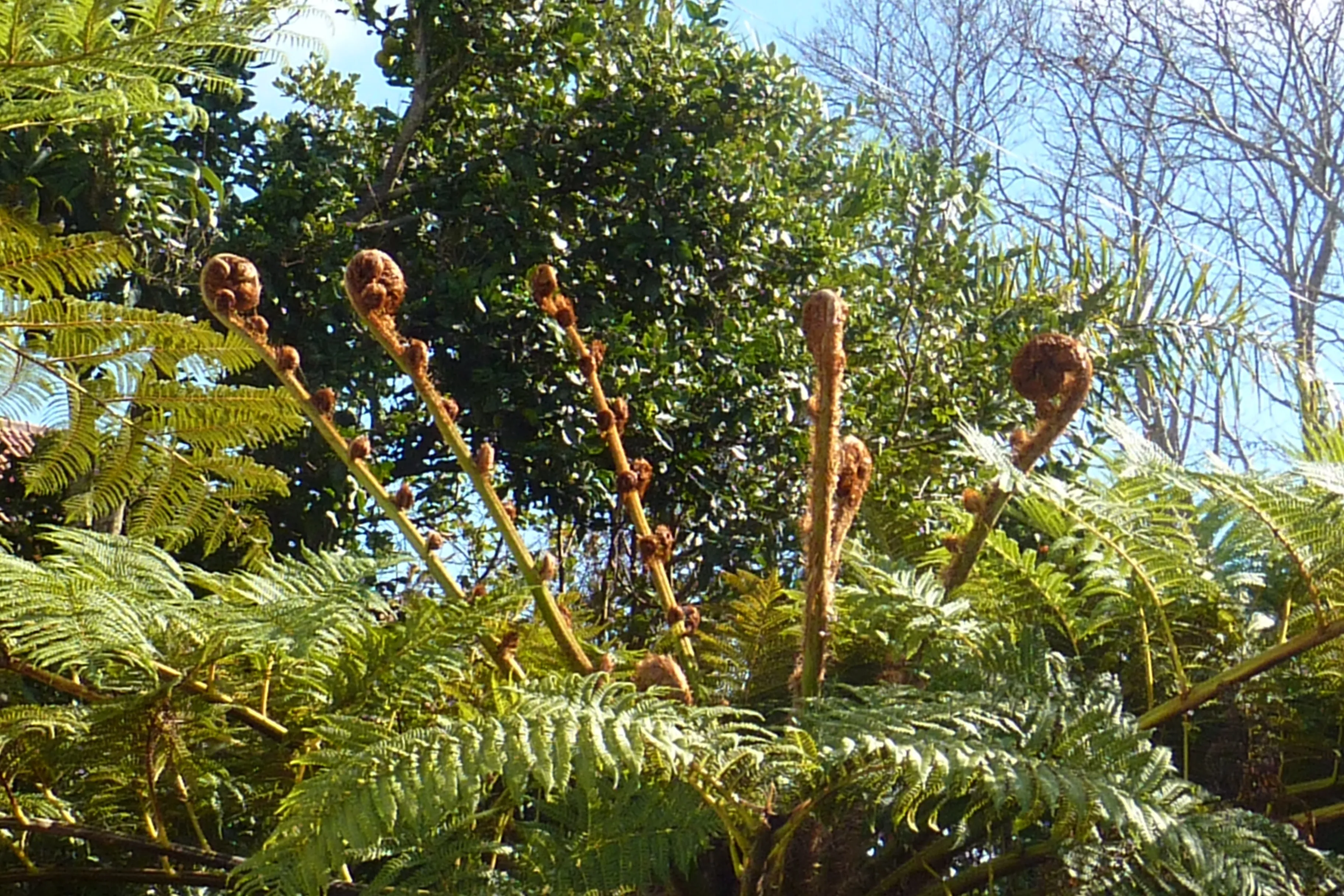
A tree fern is a simple structure: a fibrous trunk, a crown of fronds, no branching. That simplicity is what makes it useful in design. Each plant occupies a defined cylinder of space, so height and spacing can be composed almost like columns in a room.
Planted at two or three heights, they produce a canopy that filters rather than blocks light — the difference between a shaded garden and a dark one. The fronds move, which no built roof does, and they drop old leaves that build a mulch layer without any maintenance decision.
The constraint is water and shelter. Tree ferns want humidity, shade on the trunk and protection from salt wind; exposed coastal sites will burn the fronds even where the plant survives. On the humid north of Madeira they are close to effortless. On the dry south coast they need a sheltered pocket and irrigation to establish.
Used well, they are not decoration. They are the ceiling of the garden.